
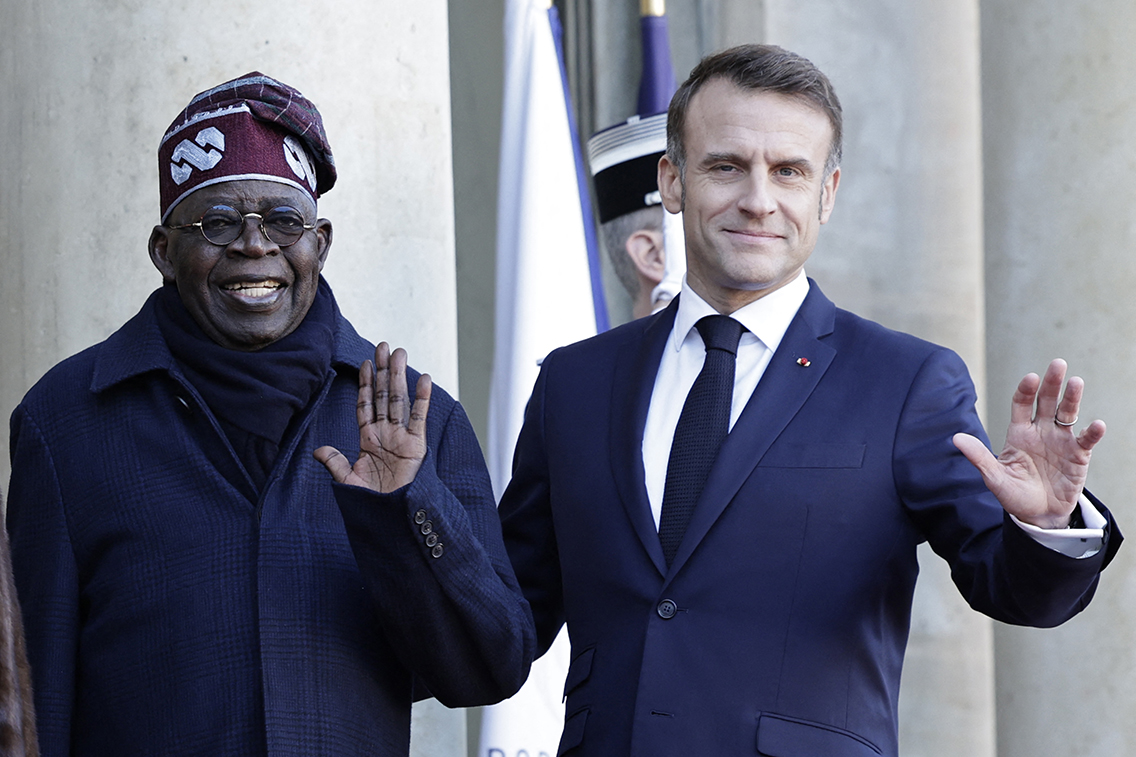
For decades, France’s engagement with Africa was defined by its deep political, military and economic ties with its former colonies – a system widely described in academic and policy circles as Françafrique. Built on linguistic affinity, cultural assimilation, elite networks and security cooperation, this model shaped France’s influence across West and Central Africa for more than half a century. But the geopolitical landscape has shifted dramatically. President Emmanuel Macron has embarked on what observers describe as a strategic “anglophone Africa pivot” – a recalibration of France’s Africa policy toward a broader, more inclusive continental engagement.
In this context, France’s pivot toward anglophone and lusophone Africa – from Kenya to Nigeria, South Africa, Ethiopia and Angola – is both strategic and necessary. These countries are economic powerhouses, innovation hubs and influential diplomatic actors. They also represent the future of Africa’s demographic and economic growth.
Macron looks to future
President Macron has repeatedly stated that France must move “from aid to partnership”. This shift became visible during the Covid‑19 pandemic, when France advocated for increased financial support to developing countries, championed debt suspension under the G20’s Debt Service Suspension Initiative, supported debt cancellation through the Paris Club, and pushed for the recycling of $100bn in IMF Special Drawing Rights (SDRs) to vulnerable economies. France was among the first countries to commit a significant share of its SDR allocation to Africa, arguing that global recovery required equitable access to liquidity.
The Nairobi Summit builds on this approach by focusing on seven thematic areas that reflect Africa’s priorities under the African Union (AU) Agenda 2063. Peace and security are central, with Africa seeking to strengthen African‑led mechanisms under the African Peace and Security Architecture. Energy transition and green industrialisation follow, recognising Africa’s vast renewable energy potential and its position as home to 30% of the world’s critical minerals.
A changing geopolitical landscape
The pivot by Macron is therefore not only about repairing relationships; it is about remaining relevant. On the energy transition, France sees Africa’s critical minerals and renewable potential as essential to global decarbonisation and to European industrial competitiveness. On digital technologies, France’s support for open AI frameworks and digital infrastructure positions it as a partner distinct from China’s hardware‑driven model and the US platform‑driven ecosystem. In health, France’s backing for local vaccine and pharmaceutical manufacturing aligns with Africa’s push for health sovereignty. On the financial reform front, France has been one of the strongest advocates for restructuring global financial systems to better serve developing economies.
The Nairobi Declaration
The Africa Forward Summit will culminate in a Nairobi Declaration, expected to outline measurable commitments, co‑investment frameworks, technology‑transfer pathways and a roadmap for long‑term cooperation. African leaders aim to ensure that the Declaration reflects African ownership, avoids donor‑recipient language and aligns with Agenda 2063.
For France, the Declaration represents an opportunity to reset relations on a foundation of mutual respect and shared strategic interests. For Africa, it is a chance to shape a partnership that supports industrialisation, innovation and global influence.
Macron’s anglophone Africa pivot is therefore more than a diplomatic gesture – it is a recognition that Africa’s future lies in equitable and fair partnerships and a new model of cooperation fit for the 21st century.