
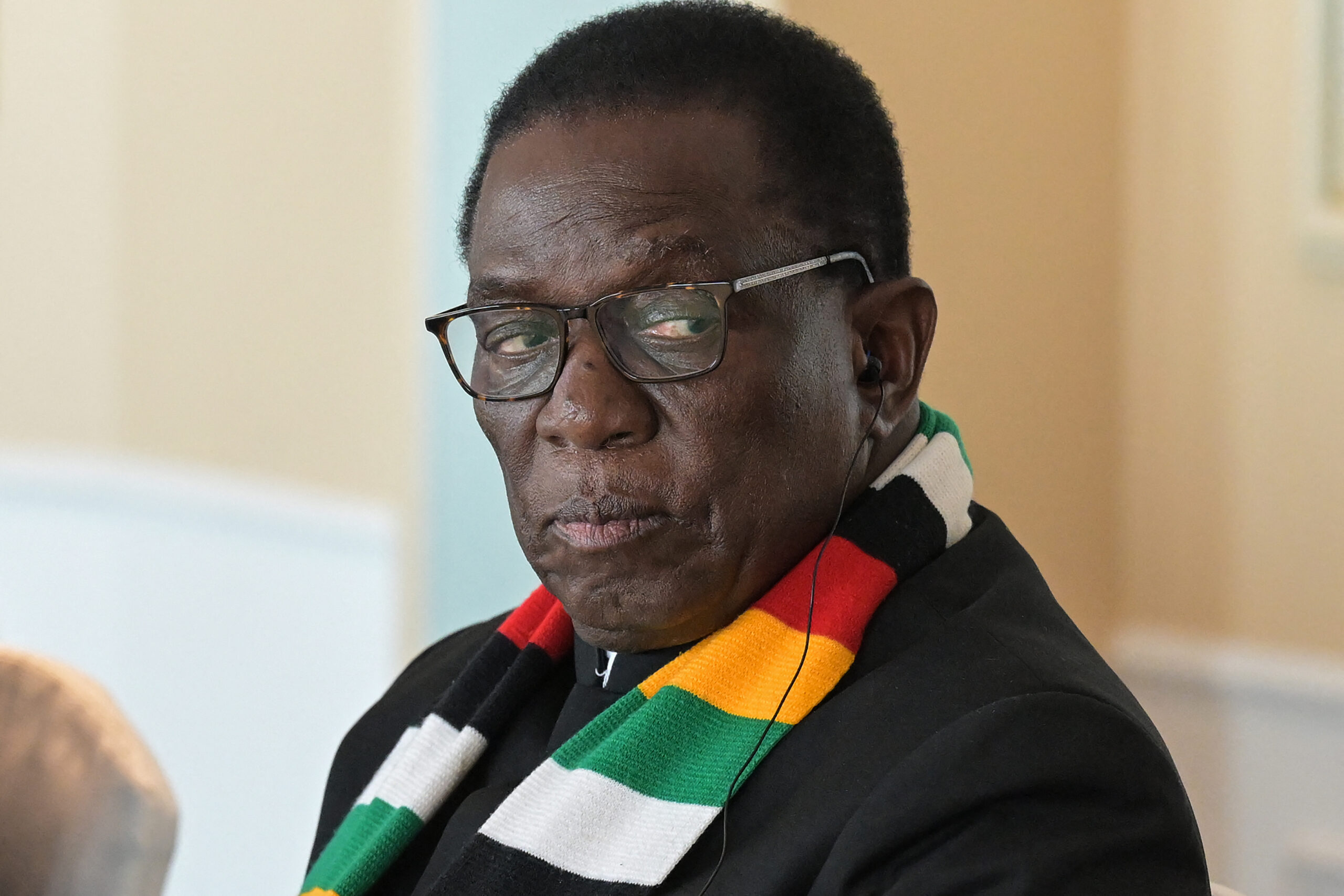
A push by Zimbabwe to restructure its $23bn debt is running into fresh headwinds as a controversial plan to extend President Emmerson Mnangagwa’s tenure complicates talks with lenders.
A constitutional amendment bill seeks to scrap the 2028 elections and extend Mnangagwa’s term by at least two years, to 2030, without the two referendums required by law.
Parliament concluded public hearings on the bill in early April and will vote on the bill in May. Mnangagwa’s ruling Zimbabwe African National Union-Patriotic Front (Zanu-PF) controls the legislature and is unlikely to block the proposals.
The constitutional changes remove voters’ direct election of the 83-year old president and give it to parliamentarians. It will also increase Mnangagwa’s control over elections, courts and traditional leaders.
Unsettled creditors
The plans have not endeared Zimbabwe to the country’s international lenders.
Zimbabwe owes $14bn of its $23bn public debt to international creditors, among them the World Bank, the Paris Club (an informal group of 22 permanent official creditor nations), the African Development Bank (AfDB), the European Investment Bank, and China.
Former Mozambican President Joaquim Chissano and the AfDB are helping Zimbabwe to negotiate with creditors.
Paris Club members and other creditors have consistently cited the rule of law, democracy and credible elections as preconditions for any arrears clearance deal.
At the IMF/World Bank Spring Meetings in Washington in April, finance minister Mthuli Ncube was forced to defend the plan after creditors reportedly raised red flags. Ncube told reporters in a virtual press briefing that he had to explain the proposed constitutional changes in creditor meetings.an
Eneida Fernandes, World Bank Group country manager for Zimbabwe, tells African Business that several key factors, like macroeconomic stability, sound governance frameworks, and consistent and transparent engagement with creditors and development partners underpin a successful debt restructuring process.
“Debt restructuring is a critical step for Zimbabwe’s long-term economic stability and the wellbeing of its people. As a committed partner to Zimbabwe, we remain actively engaged in supporting that process and the country’s efforts toward debt resolution and economic recovery,” Fernandes says.
Titus Mukove, an economist based in Harare, says the proposed bill to extend Mnangagwa’s term to 2030 is complicating the country’s high-stakes debt restructuring talks.
“It creates risk for Zimbabwe’s debt restructuring process. The major risk is around governance conditionality. A constitutional amendment to extend term limits is read by many creditors as weakening the checks and balances in the system.”
Economic gains at risk?
Mukove says the proposed term extension emboldens sceptics in creditor nations and could delay debt relief, even though economic reforms are on track. Zimbabwe introduced a new currency, Zimbabwe Gold, known as ZiG, as part of its economic reforms in April 2024. After maintaining a tight monetary policy, Zimbabwe has gone for four months with a single-digit inflation rate, a positive change from triple-digit and hyperinflation experienced in the past.
In April, the IMF said that “Zimbabwe’s economic recovery continues, supported by tight monetary policy, improving fiscal discipline, and favorable external conditions”.
The Fund pointed to “solid performances in agriculture and mining, boosted by high gold prices and recovering platinum and lithium output.” It reported that inflation had declined sharply, reaching 4.4% in March 2026, “aided by a stable foreign exchange rate and tight monetary conditions.” The Fund, which projects growth of 5% this year, has approved a 10-month staff-monitored programme to monitor authorities’ monetary discipline and governance reforms.
Improved relations with the IMF are key to Zimbabwe’s debt resolution plans. The completion of the staff-monitored programme is a key part of a plan to attract sponsors for a $2.6bn bridging loan, which will allow the country to repay multilateral creditors, who would be reimbursed when they resume lending to Zimbabwe. The southern African nation hopes that countries like France, the UK and Germany will sponsor the bridge loan.
However, Masimba Kuchera, an economist based in Harare, says political instability could derail progress – as it has in the past.
“Discussions about the constitutional amendment bill number 3 have introduced instability in the political realm. There is now a discussion around whether the president is going to stay for two years or not,” he says.
“That affects the debt restructuring. The maintenance of the rule of law and of good governance is a key element of all this.”
Lenders require certainty
Mukove says debt restructuring arrangements require repayment plans that run for years, and lenders and sponsors need to believe that the government and the same rules will be in place to honour these commitments through 2030 and beyond.
He says when constitutional changes are introduced, it sends the signal that policies can shift for political reasons.
“This raises the risk premium. So, it means creditors demand shorter tenures, higher interest rates and more cash up front before approval,” he says.
“If key stakeholders see term extension as democratic backsliding, they can abstain or vote no… without [IMF] board approval the bridge loan and the wider debt cannot move. Headlines about extending presidential term limits to 2030 make that justification harder, regardless of what the IMF staff say about the fiscal numbers. It becomes easy for opposition parties in the sponsoring countries to block such support,” he says.
Zimbabwe government faces dilemma
Kuchera says the IMF’s staff-monitored programme is politically sensitive because it requires commitments that are often out of step with Zanu-PF’s political interests.
While a term extension bill does not itself breach fiscal targets, it would still be reported to the IMF board because as part of the staff-monitored programme, their staff are required to report any material developments that could affect the programme objectives, including political instability and governance erosion.
Mukove says the presidential term extension could therefore erode the confidence of potential bridging loan sponsors.
“The sequence is clear: to restructure debt, Zimbabwe must first clear arrears to the World Bank and the AfDB. To do that, it needs sponsors. To get sponsors, it needs both a successful staff-monitored programme and political comfort on governance,” he says.
“The timing, the process, and the level of additional debate around the bill will be watched by the sponsors closely.”